This is a weird, meandering, rambling text and I don’t know where it’s going. It’s too long and full of unfinished thinking and random quotes by people much smarter than me. However, it embodies the spirit in which it is written, it grapples with the complexities and uncertainties of being a human being living through these troubled times.
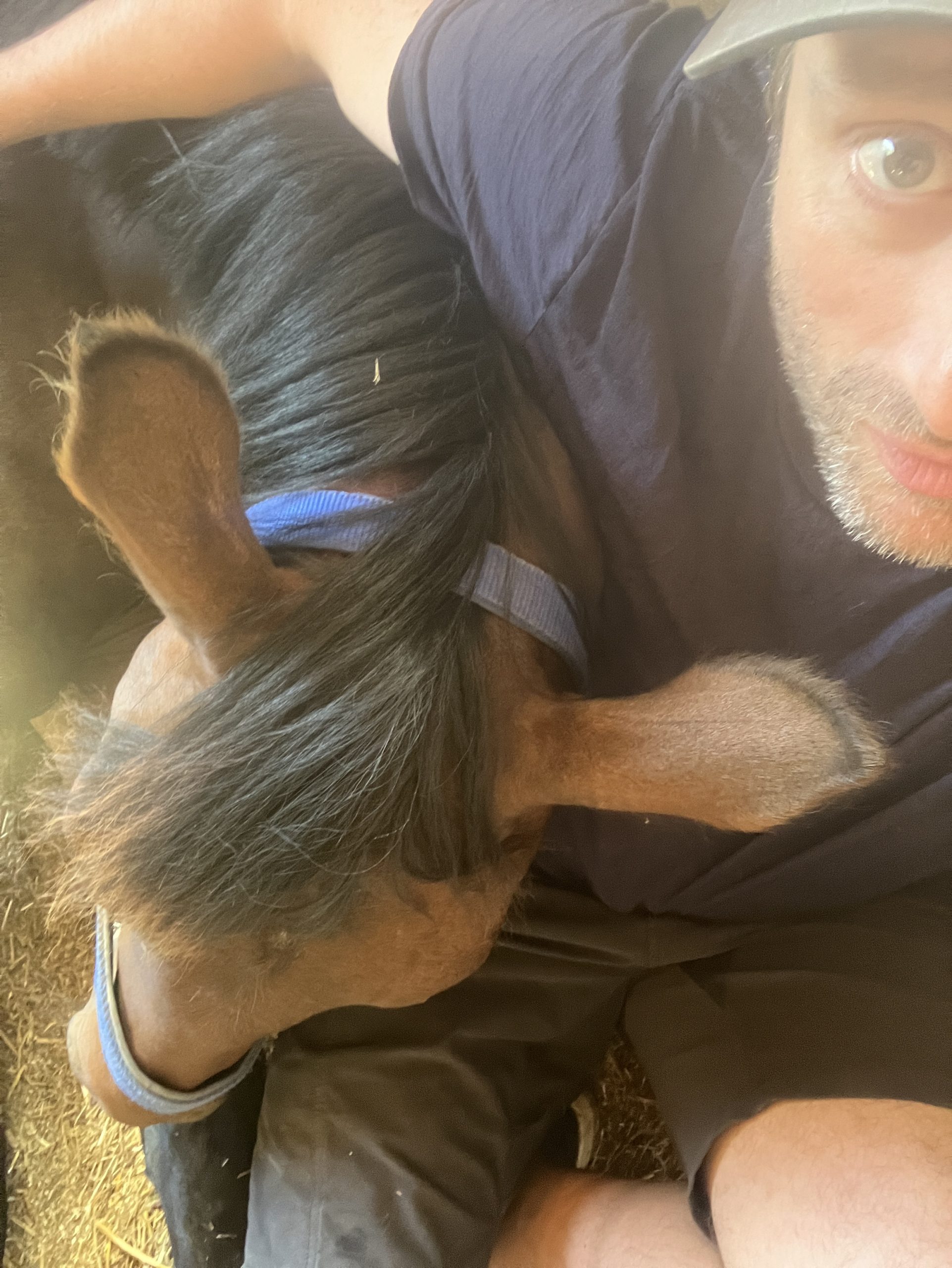
I feel like a broken record, when I keep insisting that all I’m really interested in is exploring better ways of living together in more-than-human worlds. That’s what I care most about, at work as in life, and I think play might help us with that, whether we’re playing with fellow human beings, horses (!), trees, rivers or anything that exists in the world.
’The multiplicity of forms! The hummingbird, the fox, the raven, the sparrow hawk, the otter, the dragonfly, the water lily! And on and on. It must be a great disappointment to God if we are not dazzled at least ten times a day.’ (Mary Oliver – Blue Horses)
It seems I’ve been concerned with this issue for a while. In my first rambling bit of writing about CounterPlay all the way back in 2013, before I knew whether the festival would ever happen or not, I described it like this:
‘CounterPlay is a tribute to and an exploration of the many ways, in which a more playful approach can help us live better lives. We focus on the excitement, intense engagement and rich experiences of people involved in all kinds of playing experiences. This sparks an investigation of how play can be transformative, change our thinking, push our boundaries and lead us places, we never imagined.’
10 years later, in my PhD thesis (which was heavily inspired by CounterPlay, by the way), I wrote in the introduction that:
’Through this thesis, I will talk a lot about democracy, but what I am really interested in is the difficulties of living together, for humans and more-than-humans alike. This is what drives me, but I believe that democracy is probably the best way to explore and create better conditions for our shared lives on planet Earth’ (Poulsen, 2024a, p. 37)
And in the conclusion I suddenly started talked about tents:
’ Whereas this work has been stretched out between democracy, design and play as crucial tent poles, it was never primarily about any of that, per se, just like the tent is not about the poles, pegs, and fabric, but the ways of living enabled by a temporary shelter. And it is exactly matters of life and the difficulties of living together I remain most concerned with.’ (Poulsen, 2024a, p. 377)
But what does all this really mean? When are we exploring ways of living together, and when are we not? It always feels like I don’t have exactly the right words, that language is inadequate, that the perfect, succinct description forever eludes me.
Yet, in the face of certain failure, I’ll try again.
What is it about living better lives together, and where does play come in?
Years ago, I read Thomas S. Henricks ’Play and the Human Condition’ (Henricks, 2015). Henricks, drawing on Huizinga, argued that when we play together and ’when people agree on the terms of their engagement with one another and collectively bring those little worlds into being, they effectively create models for living’.
When we play together, we ‘effectively create models for living’.
Similarly, and years before Henricks, the German philosopher Eugen Fink wrote that ‘Jedes Spiel ist ein Lebensversuch, ein vitales Experiment’ (Fink, 2023, p. 22) (‘Every instance of play is an attempt on the part of life, a vital experiment’ (Fink, 2016, p. 24).
I love that word, ‘Lebensversuch’, and I believe it captures much of what I’m trying to say. When we play together, we are also trying out ways of living together through ‘vital experiments’. When play is bound to be a love of my life, it’s exactly because it speaks to who we are, who we might become and how we can live together.
In making these arguments, I have already taken for granted that play is not escapism, and that it is far removed from all the familiar ideas of play as frivolous pastime. I also assume play is for everyone, all through life, for humans and all other living beings. To me, play is an existential phenomenon, it’s a way of being alive. I’m not saying play is inherently good, I’m painstakingly aware of all the malignant, cruel things done in the name of play, but I am saying that it can be a force of good, under the right conditions.
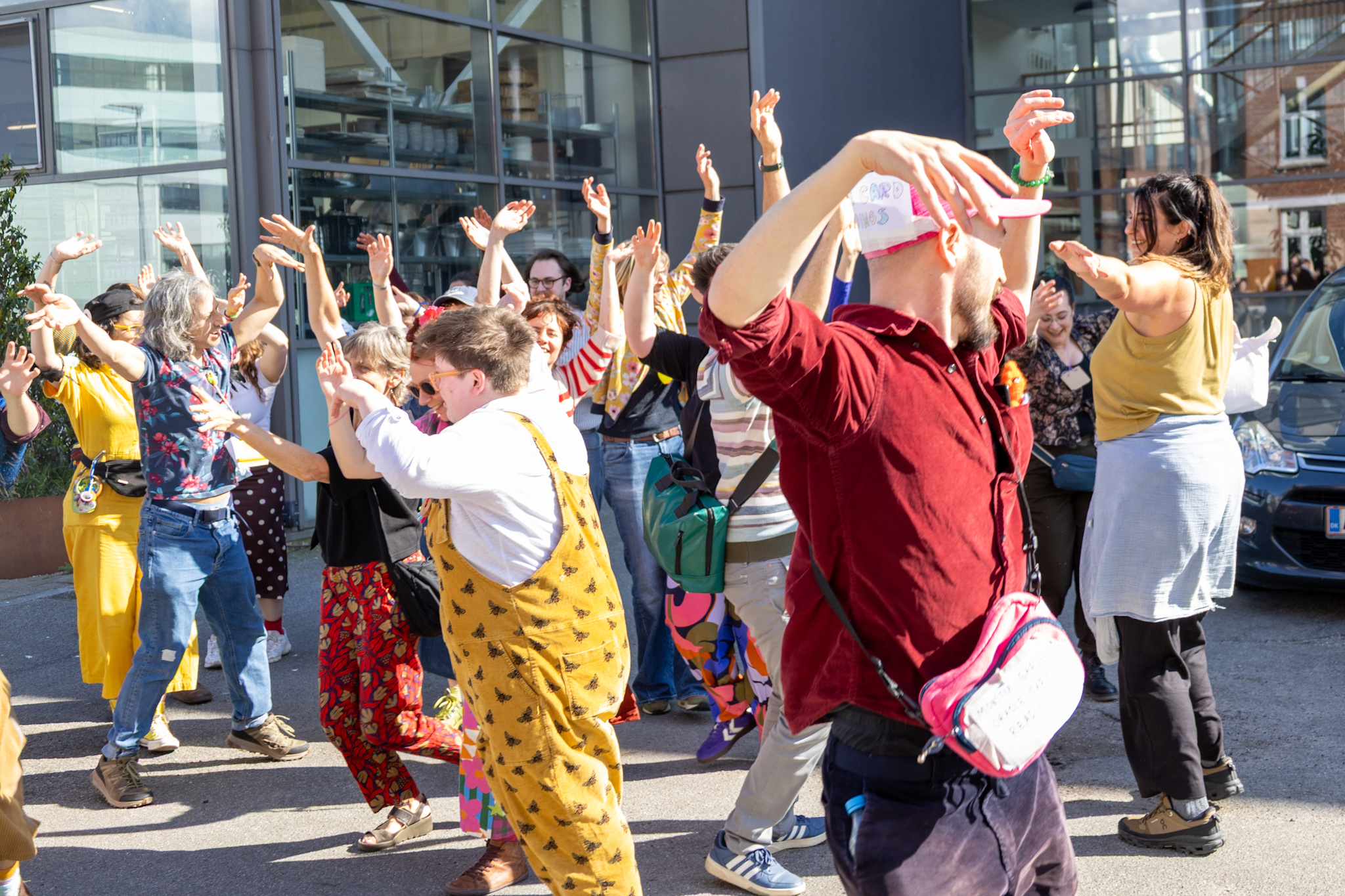
When play is real and sincere, when we bring our whole selves to the encounter (Akama, 2021), when we are no longer hiding behind carefully built facades; If we dare to just show up and be present, play helps us move beyond the superficial, beyond that which is dictated by social norms and all the weird structures and systems we have built.
There is no reason why our encounters in life, with humans and more-than-humans, can’t be more like that. It’s no law of nature that we meet each other as if it’s all just a transaction, as if ‘there is a war on the idea of interdependency’ (Butler, 2015, p. 75). Ideals of seriousness and professionalism have been invented and shaped by us, they are the marching beat of conformity, but we could just remake them. As David Graeber argued, ‘the ultimate, hidden truth of the world is that it is something that we make, and could just as easily make differently’ (Graeber, 2015, p. 54).
I’m aware that what I’m talking about here is a daunting proposition and a big ask. It requires a commitment that I guess we’re simply not used to. For many of us, it’s probably too much, an unrealistic, romantic idea.
…but I am a naive romantic and I believe it is possible under the right circumstances to connect deeply through play. I like to think that over the years, CounterPlay has offered such circumstances. Not all the time, never for everyone, but momentarily, for some of us. It is in those rare, enchanted moments where we dare and manage to be so fully present that nothing else matters. We are just there, together, in the flesh, we are attuned and surrendering to the affective intensities. That is in those moments play becomes magical, allowing and encouraging us to enact other ways of living together. It’s not a speculative act, we’re not dealing in prediction or forecasting, but in prefiguration (Carroll et al., 2019; Piccardi et al., 2022). In those brief, ephemeral glimpses, we might sense that other ways of being together, other trajectories through life, other worlds, are possible. We are not asking for a return on our investment, we forget about our KPIs, our own individual achievements, all the things we normally consider our duty as neoliberal footsoldiers.
’ the normative reign of homo oeconomicus in every sphere means that there are no motivations, drives, or aspirations apart from economic ones, that there is nothing to being human apart from “mere life.” Neoliberalism is the rationality through which capitalism finally swallows humanity—not only with its machinery of compulsory commodification and profit-driven expansion, but by its form of valuation. As the spread of this form evacuates the content from liberal democracy and transforms the meaning of democracy tout court, it subdues democratic desires and imperils democratic dreams.’ (Brown, 2015)
In play, we are just there, together, helping each other feel just a little more alive.
’Being open and receptive to joy is surely the very opposite of having to watch and monitor our behaviour to ensure we are making just the right impression on others, when we are doing that work of self-display before calculating eyes’ (Segal, 2018)
I have argued before that play carries the potential to radically challenge and transform the world we know. To be a bit more academic about it, if you will, I’d say that playing like this opens the possibility for playing with onto-epistemological configurations (Poulsen, 2024b), challenging dominant narratives about what counts as knowledge and how reality itself is constituted.
I’ll admit that I’m trying to make an argument that exceeds my own ability to fully grasp it’s implications, but ‘not-knowing’ (de la Cadena, 2021), unlearning and letting go of all the flawed, destructive assumptions on which we have built entire societies.
To begin with perhaps the most debated and elusive concept, play questions the dominant ontology of western modernity. The kind of play I talk about here doesn’t unfold between autonomous, rational individuals in competition with one another, but rather between people who are always-already entangled. It is made and remade through relations, it comes alive in encounters, it is sympoeisis in action (Haraway, 2016).
Similarly, while there’s still a dominant epistemological narrative rooted in disembodied rationality, insisting that knowledge belongs to the domain of our cognitive faculties, play cannot be understood like that. To know about play is also to feel it in the body, in the pulsating affective energies between bodies.
“The ecological humanities aims to work across the great divides in knowledge that have enabled us to sustain a faulty image of humanity, an image that holds humans apart, and in control. We are not aiming to homogenize everything, or to suggest that everyone has to do or think everything. Quite the opposite, we acknowledge that there are many abrasive edges between knowledge systems. We believe that rubbing those abrasive edges together enables something new to happen.” (Fincher et al., 2015)
As Markus Holdo argued, ‘participation may feel meaningful because the values it embodies are missing in society at large. To be part of a space where they are put to practice may give hope for change’ (Holdo, 2023, p. 52). He further argued that ‘something has already changed when people get together and form bonds of mutual trust and solidarity and experience the power of collective action. Where would significant social change begin if not in spaces that make such hope, such bonds and such action possible? (Holdo, 2023, p. 52)
Coming back to my PhD, I wrote this:
‘The primary democratic quality of the junk playgrounds is thus that they have provided us with a friction to destabilise axiomatic assumptions, allowing people to experiment with other ways of living and becoming. We can explore, through play, not only what it means to be human and to be alive, but also, and more importantly in this context, what it might mean to be human, what life might be like, if lived otherwise. We play with potentiality and alterity when we see and sense, in the flesh, other worlds where other ways of being human, other ways of living, are not only possible but real in the here and now.’ (Poulsen, 2024a, p. 344)
Big words, perhaps too big, but I’m just saying that play, in this case the junk playgrounds, might allow us to challenge even the most fundamental assumptions about the world, life and reality itself.
As such, we might be exploring the ‘art of existing in a way that supports life instead of destroying it’ (Varpanen et al., 2024). Maybe occasionally, play makes us more ‘response-able’ (Haraway, 2016), allowing us to respond to Hannah Arendt’s famous dictum that we must all ‘decide whether we love the world enough to assume responsibility for it’ (Arendt, 1961, p. 196). And in the best, most treasured moments, we can paraphrase Deborah Bird Rose to say that ‘we play (instead of ‘write’) ~ to cherish the living world ~ to keep my love flourishing ~ to call forth love, and to be called into the depths ~ (Rose, 2013, p. 10). Or, as Jennifer and I once wrote, learning to exist is always ‘an ongoing practice of love, vulnerability, and relational care – an attunement to the world’s persistent urgencies and the possibilities for deeper connection, ethical responsiveness, and transformative ways of relating to the more-than-human world’ (Skriver & Poulsen, 2025, p. 16).
And again, play, to me, is the major catalyst, it is the way of being, becoming and ‘co-becoming’ (Bawaka Country et al., 2013, 2016) that reminds me, compels me, to exist otherwise, to pursue other possible worlds.
I’m not sure all this makes things even the least bit less confusing, but as always, I’m not writing to end the discussion, or to win any arguments, but merely to invite conversations. Let’s gather around the campfire and talk.
…
‘Why do I have so many thoughts, they are driving me crazy.
Why am I always going anywhere, instead of somewhere?
Listen to me or not, it hardly matters.
I’m not trying to be wise, that would be foolish.
I’m just chattering’(Mary Oliver, ‘I don’t want to be demure or respectable’, in ‘Blue Horses’).


Leave a Reply